Confiscated Assets: Memorandum of Understanding with ANBSC
Fondazione con il Sud and ANBSC (the National Agency for the Administration and Destination of Assets Seized and Confiscated from Organized Crime) sign a memorandum of understanding to strengthen third-sector involvement in the redevelopment and reuse of confiscated assets in Southern Italy.
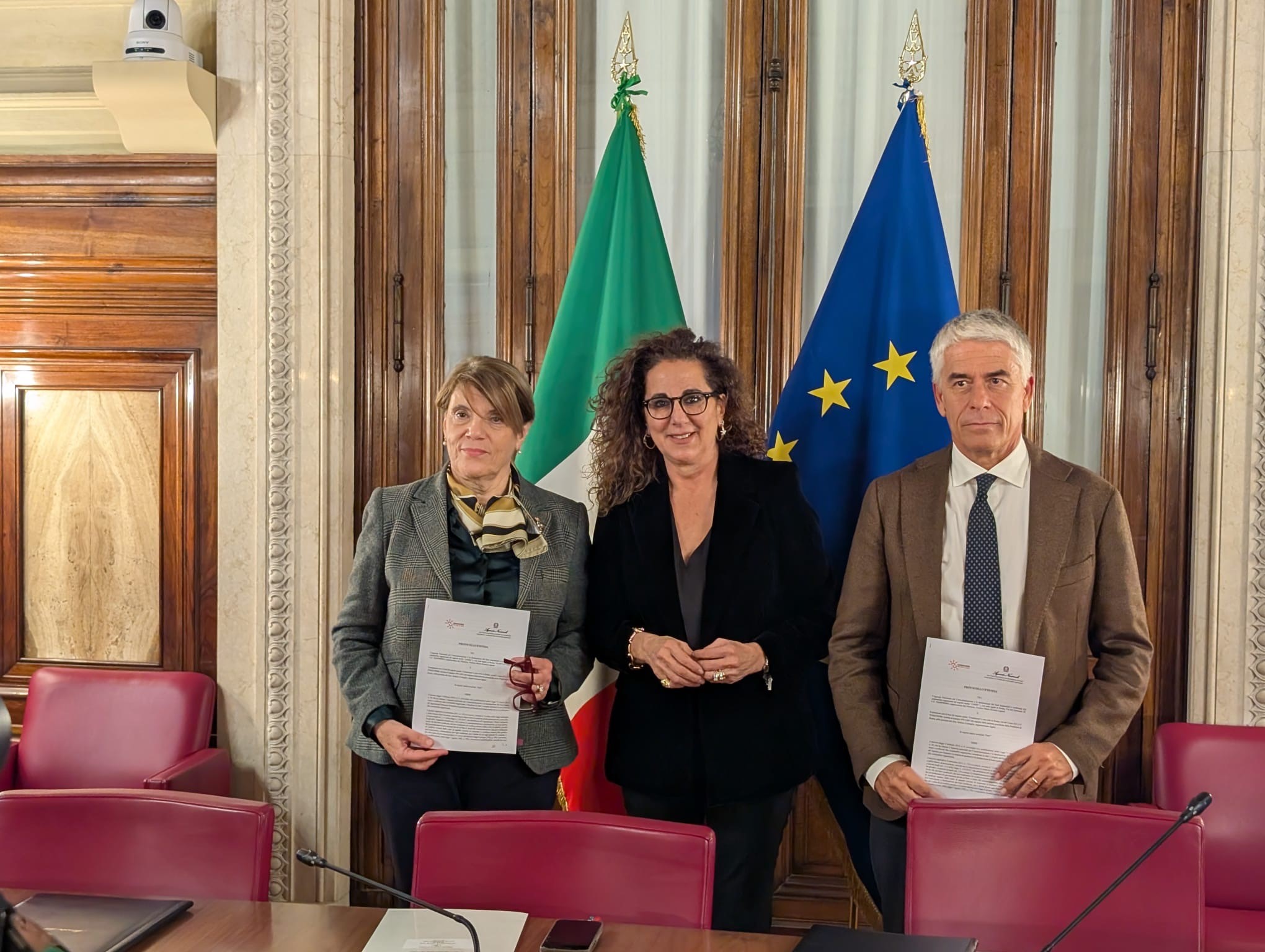
A Memorandum of Understanding was signed this morning at the Ministry of the Interior (Viminale) between Fondazione con il Sud and the National Agency for Seized and Confiscated Assets (ANBSC), aimed at facilitating access for third-sector organizations to information and opportunities related to the repurposing of confiscated assets. The initiative seeks to strengthen the joint commitment of the two organizations to promote the redevelopment of assets seized from organized crime as a powerful tool for community rehabilitation and economic growth, while elevating the third sector’s role in converting and managing these assets.
The agreement outlines three lines of action: creating a georeferenced map of confiscated assets already assigned to third-sector organizations, complete with details on their current social reuse and community initiatives; establishing partnership agreements between the Agency and foundations interested in funding social impact projects for these assets; and launching communication campaigns aimed at the social sector to increase visibility around active tools for unlocking the value of these properties.
The three-year agreement also provides for the creation of a technical working group, coordinated by ANBSC, which will conduct research and analysis to identify the most effective operational solutions.
‘This Memorandum,’ commented Deputy Minister of the Interior Hon. Wanda Ferro, ‘strengthens cooperation between the National Agency and Fondazione con il Sud in practical terms, reinforcing the chain that connects the State, local authorities, and third-sector organizations, in other words, those who administer, those who understand local communities, and those who generate social cohesion every day, to implement structured initiatives, achieve measurable results, and manage confiscated assets more effectively. The georeferenced map of assets designated for social purposes, the possibility to activate specific partnership agreements, and the creation of a technical working group are all tools that will make the entire redevelopment process faster, more transparent, more traceable, and verifiable.’
‘With the signing of this Memorandum,’ said ANBSC Director, Prefect Maria Rosaria Laganà, ‘the National Agency for Seized and Confiscated Assets continues its commitment to building high-level partnerships aimed at strengthening the Agency’s core activities and practices for returning assets seized from organized crime to the community. The goal is to provide concrete support and advance redevelopment efforts, particularly for those working on projects to put these assets to social use.’
Fondazione con il Sud is the organization most actively engaged in the redevelopment of confiscated assets in Italy. Since 2006, it has supported the redevelopment of more than 100 confiscated assets across Southern Italy, with a total investment of EUR 25.8 million through five dedicated calls for proposals and one ongoing initiative. These assets are mostly buildings (67), but also include land, plots with buildings, and one watercraft. In terms of regional distribution, the initiatives are concentrated primarily in Campania (35) and Sicily (25), followed by Calabria and Puglia (19 assets each) and Sardinia (2). The ‘survival rate’ of activities launched within confiscated assets beyond the end of the funding period stands at 67 %.
‘Fondazione con il Sud,’ said President Stefano Consiglio, ‘has contributed to the redevelopment of nearly 10 % of all confiscated assets in Italy entrusted to third-sector organizations, and to the creation of more than 90 partnerships. This is a great source of pride for us, because we deeply believe in this model of intervention, one built on returning these assets to local communities. Third-sector organizations can truly make a difference, because they understand the characteristics and needs of their communities so well. It is a process with impact that goes beyond the social, generating employment and producing goods and services that serve the public interest, enabling social enterprises to become self-sustaining over time. More than 320 jobs have been created in Southern Italy through the projects we have supported. Five years after funding ends, a great many of these social enterprises are still fully operational and continue to provide services to their communities. We are therefore signing this Memorandum of Understanding with ANBSC with great confidence: an effort that aims to facilitate ever greater involvement of the third sector and leverage our collective expertise, promoting a productive collaboration between the public and the private-social sector.’