
‘La Buona Mensa’: Quality and Transparency on Salento’s Tables

Location
Salento

Partnerships
28

Resources mobilized
2.692.000 €
By Jacopo Francone (Age 20)
When it comes to food, every gesture, every product, and every person has a story to tell. But how do we tell it? In this case, it’s simple: bring together quality, transparency, and passion, and you have the story of Santi Paduli and its ‘Buona Mensa’ (Good School Meal Programme).
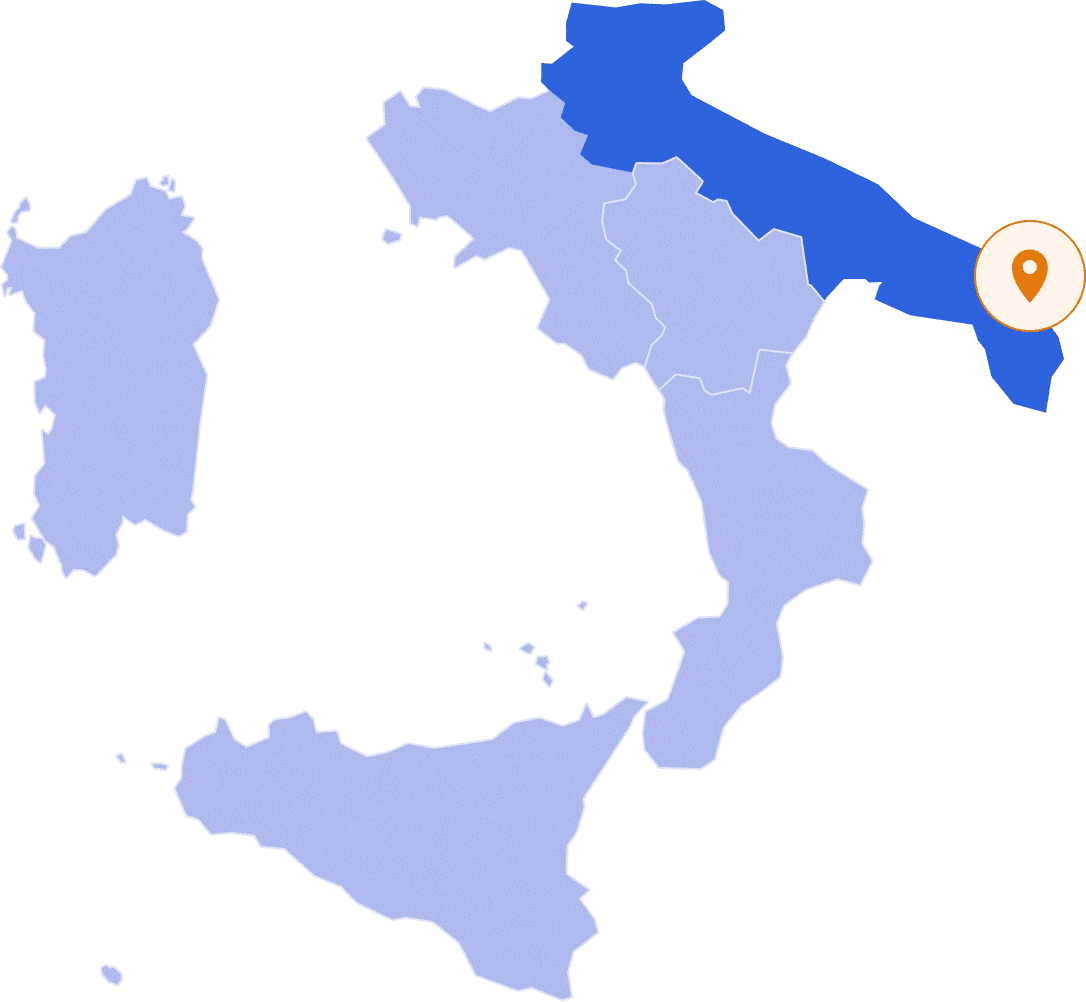
We are in Salento, in the province of Lecce, a place long associated with postcard-perfect beaches and unforgettable holidays. But this land is not just that. It is much more.
It all began in the Parco Agricolo Multifunzionale dei Paduli (Paduli Multifunctional Agricultural Park), where for several years a community-driven experience of regeneration, in the broadest sense of the term, has been underway. The region has been affected by depopulation and by Xylella, the killer bacterium that devastated the landscape and, according to 2023 estimates, killed 40 % of Puglia’s olive trees. The area covers a vast inland stretch of 5,500 hectares spanning across eight small municipalities, most with around 2,000 residents: Botrugno, Giuggianello, Muro Leccese, Nociglia, Sanarica, San Cassiano, Supersano, and Surano.
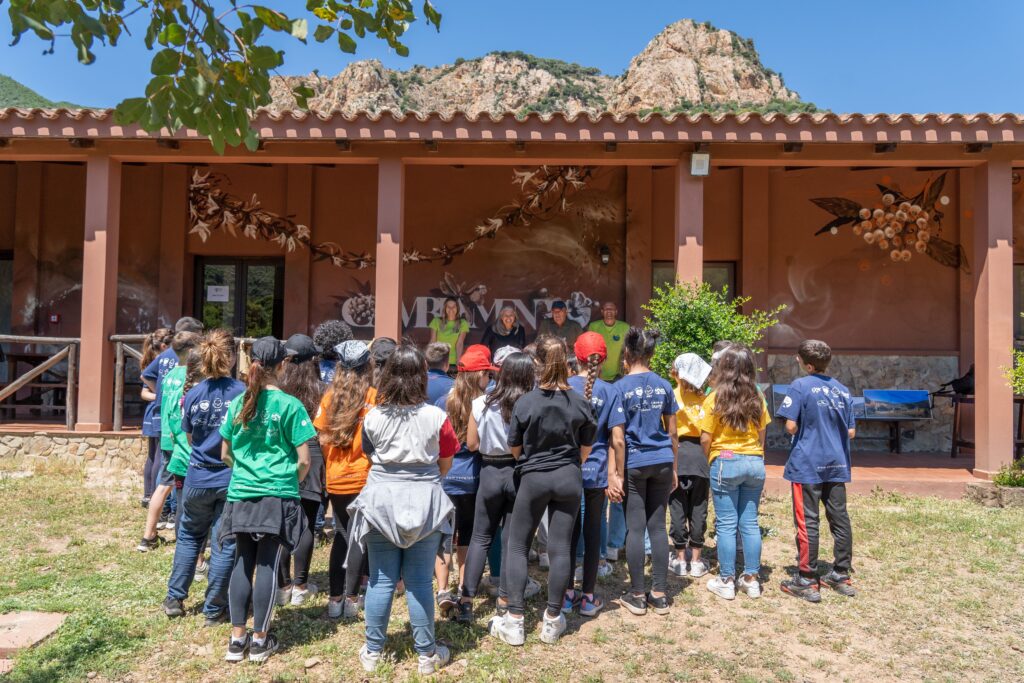
At the end of the co-design phase, under a formal agreement, the social cooperative Santa Fucina was entrusted with the management of the school cafeteria service for the Unione dei Comuni delle Terre di Mezzo (Union of the Municipalities of the Middle Lands). Around 350 450 meals are currently served each day in the schools of the eight municipalities, involving three public schools, ‘istituti comprensivi’ (combined primary and lower secondary school) and two private schools. This is how the wonderful ‘Buona Mensa’ project came to be.
Among the broader actions sparked by this operational approach, Santi Paduli is driving the gradual recovery and reforestation of 8.5 hectares of uncultivated and abandoned land, where orchards, truffle grounds, and vegetable gardens have been planted following agro-ecological principles (Il Bosco del Parco). These crops are managed by the agricultural cooperative Benedetti Paduli and processed at a specialized facility recently renovated with European funds. The goal is to market and distribute the produce under a collective area brand Gli Amici del Parco (Friends of the Park), anchored by a collective ethical code designed to promote local products: ‘healthy food’ deeply tied to local traditions and specialties.
The result is an innovative, community-driven public school catering service. By engaging local businesses that share the same set of values (organic farming, zero-kilometre sourcing, respect for tradition and biodiversity, food safety, and landscape protection), the project is establishing a short-supply-chain sourcing model that generates a diffused local economy and supports biodiversity and seasonality.
All this work has produced tangible results. On 4 March 2025, at Palazzo Valentini in Rome, the project received the ‘Piccoli ma Grandi’ (Small but Mighty) award from Foodinsider, the observatory that monitors the state of school catering in Italy every year.
The Unione dei Comuni delle Terre di Mezzo co-designed the framework with third-sector organizations to generate, at the community level, a healthy demand for food that will help cultivate a beautiful and welcoming landscape.
Santi Paduli’s initial step was to reimagine school catering, a mandatory, plannable, and vital service, as an instrument for public good, solidarity, and social impact. The ‘Banchetti della Ribellione Gentile’ (Gentle Rebellion Banquets) were participatory gatherings that brought together everyone involved in the cafeteria: farmers, cooks, food servers and transporters, children and teachers, quality control staff, public administration, associations, businesses, and parents. Together, they developed a shared manifesto, the ‘Piccolo Manuale della Buona Mensa’ (Little Handbook of the Good School Meal), which sets out the values underpinning the initiative: children’s health, short supply chains, recognition of the work of those who produce and prepare food, and the history and identity of the local area. And no, this time quality is not just a slogan.
On a typical Monday, for instance, the spring menu features a delicious spinach risotto with fully traceable ingredients: every grain of rice originates from a rice mill in Novara, Piedmont, while the spinach travels from a farm in Frigole, a hamlet near Lecce, before reaching the cafeteria’s tables. The lettuce used in one of the next courses follows the same journey. And the list could go on. How do we know all this? Because, as mentioned, it’s written right there on the menu.
Do you remember the film Sole a Catinelle and its satirical take on Checco Zalone’s obsession with mozzarella? Well, nothing could feel further from the times we live in today, when knowing as many details as possible about the origin and quality of our ingredients is essential, both to avoid unpleasant surprises and to give proper credit to those working to offer quality products with sustainability in mind.
Impact area
The Paduli Agricultural Park is a vast olive grove at the heart of the province of Lecce. Its constituent municipalities, located just a few kilometres apart, operate with statutory autonomy through the Unione delle Terre di Mezzo (eight municipalities covering an area of 115.11 km²). For some time, these communities have been sharing services, facilities, and planning strategies that recognize the Agricultural Park as a focal point for regional renewal. Despite significant efforts and investment in social innovation, the region’s socioeconomic context remains deeply fragile. The decay and abandonment left in the wake of the Xylella-induced destruction of the olive groves are only the visible signs of much broader social and economic hardship. Despite public efforts and investment, the area continues to face depopulation, a lack of services, emptying town centres, a weak agricultural economy, and a tourism sector overly concentrated on the coast.
Partners
- Abitare i Paduli
- Ad Astra Società Cooperativa Sociale
- Advisor Srl
- Associazione Culturale Lu Vecchiu Trainu
- Benedetti Paduli Società Cooperativa Agricola
- Boschetto Srl Agricola</p>
- <p>Centro Turistico Giovanile Gis Aps
- Comitato Feste Maria Ss.ma delle Grazie
- Comune di Nociglia
- Comune di San Cassiano
- Comune di Surano
- Comune di Botrugno
- Comune di Supersano
- Comune di Sanarica
- Comune di Giuggianello
- Comune di Muro Leccese
- Consorzio per la realizzazione del sistema integrato di welfare – Ambito di Poggiardo
- Cooperativa Sociale Attuttotenda
- Fondazione Marchese Ignazio Guarini Onlus
- Istituto Comprensivo Supersano
- Istituto Comprensivo Poggiardo
- Istituto Comprensivo Muro Leccese
- Music Platform aps
- Radice aps ets
- Rinascita Società cooperativa sociale
- Santa Fucina Società cooperativa sociale
- Tela Associazione Culturale
- Unione dei Comuni delle Terre di Mezzo